


The Government’s three-month Head Start window for councils to develop amalgamation proposals has exposed growing tensions across the Waikato, as neighbouring authorities pursue competing models and some object to being included without their support.
The process was presented as voluntary, but councils that do not submit or join a proposal could still face reform through a Government-led backstop process. With the details of that process still unclear, councils have had to decide quickly whether to join a model, develop their own or risk having one imposed on them.
That pressure has contributed to a sharp dispute over the proposed Western Waikato combined council, backed by Waikato, Waipā and South Waikato district councils. Taupō District Council says it does not want to be drawn into the model and would prefer more time to explore a smaller merger with neighbouring central North Island councils.
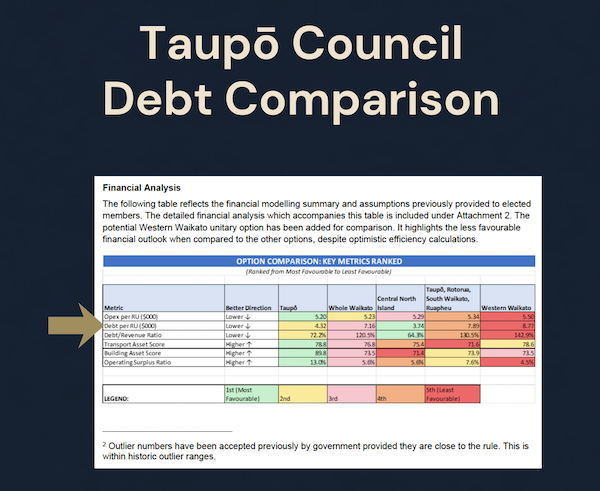
The disagreement has become increasingly heated after Taupō Mayor John Funnell warned the proposed Western Waikato council would increase the district’s debt from about $900 per rating unit to nearly $9,000. This comparison is being questioned after council documents showed the two figures were calculated using different financial measures.
In a Facebook post, Funnell warned residents Taupō was facing a “financial raid” and claimed its debt would “skyrocket from approximately $900 per rating unit to nearly $9,000” if it was drawn into a Western Waikato combined council.
He also accused neighbouring councils of attempting to use Taupō as a “cash cow” to bail themselves out.
In its coverage of the dispute, the Waikato Times compared Funnell’s combative language with the rhetoric of former US president George HW Bush, Scottish rebel William Wallace and revolutionary Che Guevara. The comparison followed his declaration that he was “drawing a line in the sand” and would “fight tooth and nail” against the proposal.
Different ways of measuring debt