

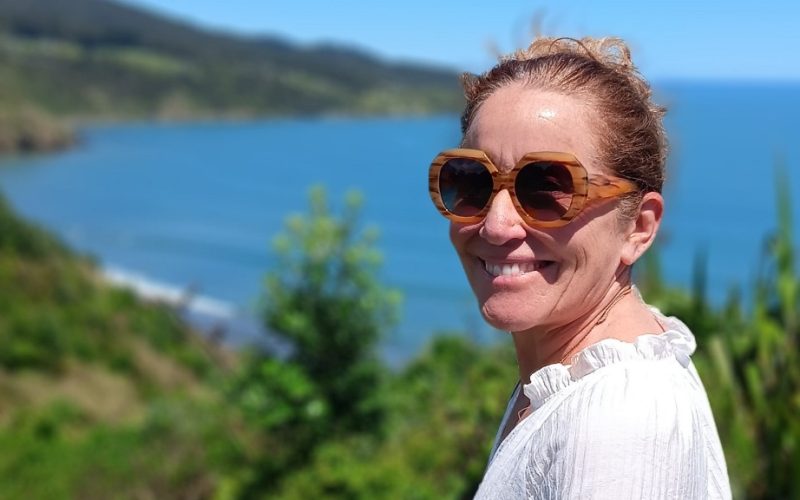
From the future of local government to the legacy of the World Surf League, Waikato District Councillor Lisa Thomson says Raglan is facing a period of significant change.
Joining Aaron on Raglan Community Radio for first catch up since Aaron returned from his hiatus, Lisa discussed everything from rates and infrastructure to Wainui Reserve and what comes next for the WSL.
“We’ve got lots of changes coming to our doorstep,” she said.
Local Government Reform Could Change Everything
Perhaps the biggest issue discussed during the interview was one that many residents may not yet be paying close attention to – the future structure of local government itself.
Following recent Government announcements, councils across the Waikato are now examining options that could fundamentally reshape how local government operates.
Potential models range from increased regional collaboration through to council mergers.
The timeline is tight.
“We only have until August the ninth,” Lisa said.
Waikato District Council has established a working group involving Mayor Aksel Bech, Lisa and several other councillors to examine potential options and work with neighbouring councils across the region.
“Doing nothing is not an option.”
“We have to work with our neighbours to come up with options.”
While no decisions have been made, Lisa acknowledged there are differing views across the Waikato about what local government should look like in the future.
For a district as diverse as Waikato, finding the right balance will be no simple task.
Rates: What Are We Actually Paying For?
With rates notices due to arrive in July, discussion also turned to the challenge of keeping costs down while maintaining the services communities rely on.
Lisa said councillors had spent months working through budgets and priorities as part of the annual planning process, looking for savings without significantly impacting residents.
“We had to make some very hard decisions.”
But for Lisa, the bigger question isn’t simply what rates cost – it’s what communities expect councils to provide.
“What are the basics?” she asked.
While water, wastewater and roads are often seen as core council responsibilities, Lisa said residents consistently ask for much more than that.
“People want good sports fields, people want sports complexes, people sometimes want swimming pools. People want parks and reserves that are well maintained, and they want to have access to those good services.”
Those expectations are not unique to Raglan. Across the district, communities want safe roads, quality public spaces and facilities that support local life.
The challenge, Lisa said, is balancing those expectations with rising costs and increasing pressure to keep rates down.
Why Council Costs Keep Rising
Part of that challenge is that councils face very different cost pressures from households.
While inflation is often measured through the price of groceries and everyday goods, councils are dealing with construction, infrastructure and maintenance costs.
“We’re in construction, we build roads, we build bridges, we build playgrounds.”
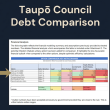
Over the past decade, New Zealand’s construction price index has tracked at almost twice the rate of general consumer inflation, highlighting the growing cost pressures facing councils as they maintain and upgrade infrastructure.
Lisa said years of underinvestment in infrastructure have contributed to many of the issues councils are now grappling with.
“The downward pressure on the rates means that we haven’t invested into the infrastructure.”
That investment includes everything from underground pipes and wastewater networks through to footpaths, parks and community facilities.
One District, Many Different Communities
Lisa also highlighted the challenge of serving one of New Zealand’s most diverse districts.
From coastal communities like Raglan and Port Waikato to rural settlements and growing urban centres, each area has its own priorities and pressures.
“Raglan isn’t the same as Huntly, Huntly is not the same as Meremere, Raglan isn’t the same as Tuakau.”
Some communities are dealing with coastal erosion, others with growth pressures, while rural areas rely on extensive roading networks and services spread across large distances.
“We have very diverse communities.”
That diversity, she said, makes council decision-making far more complex than many people realise.
Wainui Reserve Remains a Future Priority
Closer to home, discussion also turned to the long-term future of Wainui Reserve.
Work is continuing on a long-term vision for the reserve, although the process has taken longer than originally anticipated.
Lisa said the planning process presents an opportunity for the community to help shape the future of one of Raglan’s most important public spaces.
“Wainui Reserve is our jewel in the crown.”
“There aren’t many communities that have a resource like that, which is seaward facing.”
The reserve remains one of Raglan’s most valued public spaces and any future planning process is expected to involve significant community input.
Taking Stock of the WSL
Fresh off the back of the World Surf League, Lisa said it is still too early to fully understand what the event will mean for Whāingaroa in the long term.
While official reporting will be completed for central government, Lisa said local organisations are also keen to understand how the event was experienced by the community itself.
Raglan Naturally Community Trust and the Destination Management Organisation are planning a community survey to gather feedback from residents, businesses and visitors.
“We want the story from here, the good, the bad and the indifferent,” she said.
Lisa said local organisations are also exploring ways to better understand the economic impact of the event on Whāingaroa, alongside the reporting that will be completed for central government.
While opinions on the WSL have varied, Lisa believes some of the event’s benefits may take until next summer, and beyond, to become fully apparent.
She pointed to the international exposure generated through global broadcasts, athlete social media channels and worldwide media coverage, arguing that the full benefits may not be visible for months or even years.
Manaakitanga on the World Stage
Lisa also reflected on the closing ceremony, singling out Matua Sean Ellison’s address during the prizegiving as one of the event’s standout moments.
She said his kōrero captured the spirit of manaakitanga that underpinned the event while highlighting the relationships built between Whāingaroa and the international surfing community.
“He did such an amazing job wrapping up that whole manaakitanga of the event and really holding our community in such a way and amplifying that out to the rest of the world,” Lisa said.
Matua Sean spoke about taonga created by local carver Kawharu Greensill, including gifts presented to Australian representatives and pieces that would continue travelling with the World Surf League tour.
For Lisa, it was a reminder that the event wasn’t just about surfing. It was also an opportunity to share Whāingaroa’s culture, values and identity with a global audience.
“Millions and millions of times that Raglan has been shared over social media since the announcement that this leg of the WSL was coming to Manu Bay.”
While some businesses may have expected a more immediate economic boost, Lisa believes the long-term profile created for Raglan could prove just as important.
Whether the event returns remains uncertain. Lisa said this year’s competition was funded through a one-year allocation from the Government’s Major Events Fund, with any future support dependent on the outcomes and reporting from this year’s event.
“The team at the WSL would love to come back,” she said.