




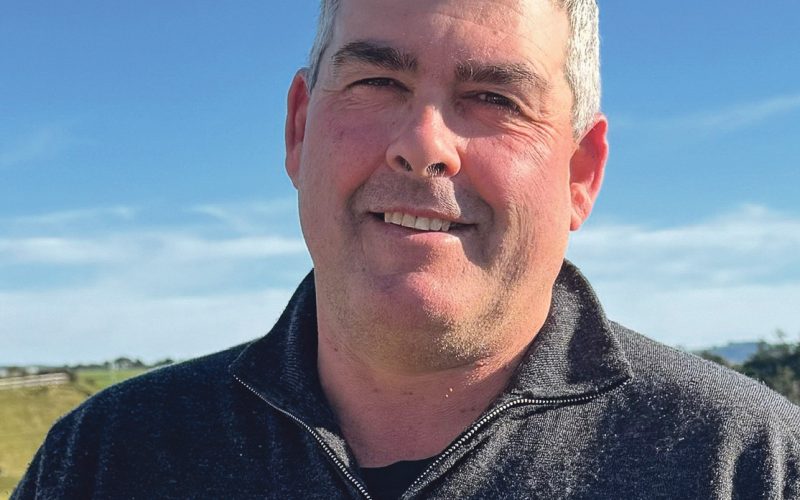
Speaking to Raglan Community Radio following Wednesday’s Community Board meeting at Te Uku Hall, chair Ross Wallis discussed the challenges of getting local aspirations off the ground, from improving bus services and navigating council processes to planning for Raglan’s future.
Better buses, but how do we pay for them?
The push for better public transport in Raglan is gaining momentum, but finding the money to make it happen remains a major obstacle.
The Better Buses group presented a petition calling for hourly services between Raglan and Hamilton, along with a local bus service connecting different parts of town.
Ross and Councillor Lisa Thomson had met with the group ahead of the meeting and support what they’re trying to achieve. However, increasing services presents something of a catch-22 – more frequent buses could encourage greater patronage, but funding is needed before those services can be introduced.
Comparisons with other Waikato towns are also complicated by different funding arrangements.
Local shuttle operators Fiona and Paul have expressed an interest in working with the council to explore how a service within Raglan might operate.
“I think we need to start thinking a bit more strategically, a bit more outside the box to how we do these things,” Ross said.
Longer-term regional transport plans include the possibility of a local route connecting the wharf, Ngarunui and Whale Bay around 2030, although funding has yet to be secured.
For Ross, improving bus services is part of a bigger conversation about Raglan’s future. Transport, parking, tourism and town development all affect one another, yet are often considered separately.
He hopes to meet with council planners in the new year to revisit Raglan’s town plan and look beyond the usual 10-year planning horizon.
Harbour land raises questions about leases
A proposal to build a church and provide around 80 car parks on Wi Neera Street has prompted a wider discussion about how Raglan’s harbour endowment land is managed.
Surfside’s proposal raised a practical question: could the cost of leasing land for parking be reduced to make the project financially viable?
Finding an answer proved so difficult that Surfside eventually abandoned plans for the site and is now looking elsewhere to build the church.
The delays have highlighted broader questions about the rules governing former Harbour Board land, including who has the authority to approve lease concessions and what criteria should apply. The Community Board has spent months seeking clarity, hoping to establish a more straightforward process for future proposals.
The endowment includes land in central Raglan, at the wharf and at Waingaro Landing. Revenue from these properties must be used for harbour and foreshore purposes and has helped fund wharf improvements alongside government funding.
The fund is currently carrying a deficit of around $1 million following borrowing to help fund the wharf upgrade, with increased rental revenue expected to repay the balance.
The board has also been examining historical documents dating back to 1851, with questions about land ownership and an associated Treaty claim adding further complexity.
Ross hopes the work will lead to a clearer process for considering future lease requests, so applicants aren’t left waiting months to find out what is possible.
Other issues discussed
World Surf League 2027: Ross welcomed the return of the Championship Tour event, although he acknowledged that some businesses benefited more than others and residents experienced disruption around access and parking. A request for free event transport for locals was raised during the public forum and will be passed on to WSL organisers.
Rubbish management: Complaints about an overflowing bin at Papahua prompted a discussion about whether more bins are necessarily the answer. Ross suggested fewer bins could encourage people to take their rubbish home, reinforcing Raglan’s approach to waste minimisation.
Stormwater and council services: Council is developing a stormwater strategy, with public consultation expected in March. Other topics included dog control rules, civil defence planning and council-controlled organisations, including water infrastructure.
Council staffing: Rochelle Dean has been confirmed as the Community Board’s senior council contact following a period of restructuring and staff turnover that has disrupted progress on local projects.
Local government reform: Ross believes community boards need greater influence over local decisions, acknowledging that their current role can sometimes feel tokenistic. However, Ross acknowledged that his frustration with the lack of progress over the past year needed to be seen in the context of local government reforms, council restructuring and significant staff turnover. He hopes things will improve as the changes settle down.
