

Raglan’s new Community Board chair, Ross Wallis, says the town is on the cusp of gaining real decision-making power for the first time in years, just as pressure mounts for long-term planning to deal with growing congestion, visitor numbers and development.
Speaking on Raglan Community Radio, Ross said he was “excited about having a little bit more autonomy, having a bit more involvement in decision making,” as Mayor Aksel Bech moves to devolve authority from the district centre to local communities.
For Raglan, where even small works can balloon into major expenses, the change feels overdue. A simple project that “might cost $500… ends up being 20 grand,” Ross said, once Council assessments and reporting layers are added.
Under the mayor’s proposal, community boards would manage projects “up to $50,000,” freeing up smaller jobs to be delivered locally and likely at lower cost.
New funding tools for local projects
Ross confirmed that Council is also working on new forms of community commissioning and capital investment.
He described a new pool of “non rate based, discretionary funding for small projects” with “less hooks involved,” aimed at supporting local upgrades and improvements without being tied to the existing, highly structured discretionary fund.
Spatial planning jumps to the top of the agenda
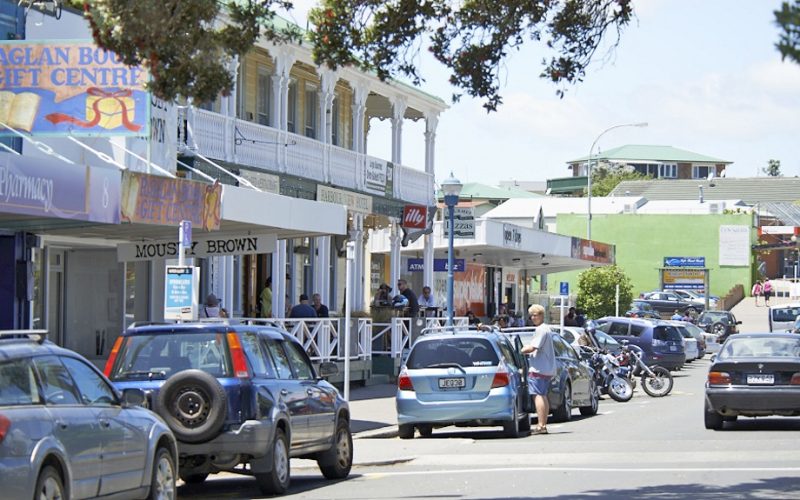
The shift in power comes at a pivotal moment. Raglan’s CBD is struggling to cope with traffic and visitor pressure, and the board is preparing to push hard for a spatial plan that has been promised for years but never delivered.
At the heart of it, Ross said, is a simple question: “What do we want the CBD to look like?”
He said traffic is now “crazy,” with many locals avoiding the town centre altogether.
“I keep away on the weekends, because it’s almost a triggering thing,” he said.
Ross believes the community must move beyond reactive fixes. “We actually need to sit down [and] do a plan,” he said – one that considers where parking should go, how people move through the CBD, and what sort of town experience Raglan wants to create.
Building a stronger, more connected board
Ross is also looking at how board members work with community groups.
“We all have our spheres of connections in the community,” he said, and responsibilities will now be aligned with those relationships to ensure consistent engagement without overloading volunteers.
He noted that former chair Denis Amoore “did… a lot of work, and more than he should have,” and says clearer structure will prevent that imbalance returning.
Major local issues gaining momentum
Key projects already on the board’s agenda include the 30-year plan for Wainui Reserve, rural roading upgrades and stormwater management.
Ross recently toured the upgraded wastewater treatment plant for the first time, calling it “world class” and “state of the art.” He said “you could literally drink the water that came out of there,” although staff advised him not to.
He said many locals continue to associate harbour contamination with the wastewater system because of historic issues – but that this perception is now outdated.
Ross noted it is “more likely to be… from stormwater,” with contaminants washed into the harbour from roads and household activity during heavy rain.
He said the community often conflates the two systems, and that improving public understanding will be an important part of future board work.
A new culture of transparency
Ross said Mayor Bech’s reforms are already shifting the tone inside Council.
“He’s starting to implement what he said he was going to do,” he said. “I think it’s a good start.”
The mayor has also indicated that Council meetings should rotate through communities rather than always being held in Ngaruawāhia.
Meetings come to Raglan this week
The Community Board meets this Wednesday at 1.30pm, after a morning hearing on submissions to the James Street freedom camping bylaw.
With the majority of submitters from Raglan, Ross said holding the hearing locally “made sense,” adding, “Why make people go into Ngaruawāhia?”
Police and Parks & Recreation staff will brief the board on summer readiness, including overflow parking at Papahua and Wainui Reserve. Surf Life Saving Raglan is also expected to update the board on bar safety and recent incidents.
The board will also confirm dates and locations for its 2026 meetings, including continuing to host at least one in Te Mata or Te Uku.
Ross said this new approach reflects a broader shift: Council is beginning to operate in the communities it serves.
“He wants to actually not have all council meetings in Ngaruawāhia, but take them out to the regions where it makes sense,” he said.
In practice, “council meetings” could cover a range of formats, including committee and subcommittee meetings, workshops and public hearings. Full council meetings are less likely to move around the district, but hearings and committee sessions are the most realistic candidates for being held in different communities.
With greater autonomy on the table and long-stalled planning work finally gaining momentum, Ross believes Raglan may be entering a turning point.
“It feels like we might get some traction,” he said.